
📑 Table of Contents
- 🎨 Custom Printed Paper Cups in Turkey: A Comprehensive Guide for Brands
- 🖨️ 1. Printing Techniques: Flexo or Offset?
- When Flexo?
- When Offset?
- 📐 2. File Preparation: How to Prepare a Print-Ready File
- File Format
- Color Mode
- Resolution
- Bleed
- Fonts
- Layers
- 🎨 3. Color Management: Why Colors Differ
- Tips for Color Accuracy
- 🔤 4. Arabic Printing: What to Watch For
- Arabic Printing Checklist
- Common Arabic Printing Mistakes
- 📦 5. MOQ and Printing
- ⚠️ 6. Common Printing Mistakes (And How to Avoid Them)
- 💡 7. Printing Design Tips
- ❓ 8. Frequently Asked Questions
- How many colors can I print?
- How much more expensive are printed cups?
- What is the MOQ?
- Can I print in Arabic?
- How should I send my file?
- How long does printing take?
- Can I get a sample?
- 🚀 9. Summary: Printed Cup Order Checklist
- Paper Cups
🎨 Custom Printed Paper Cups in Turkey: A Comprehensive Guide for Brands
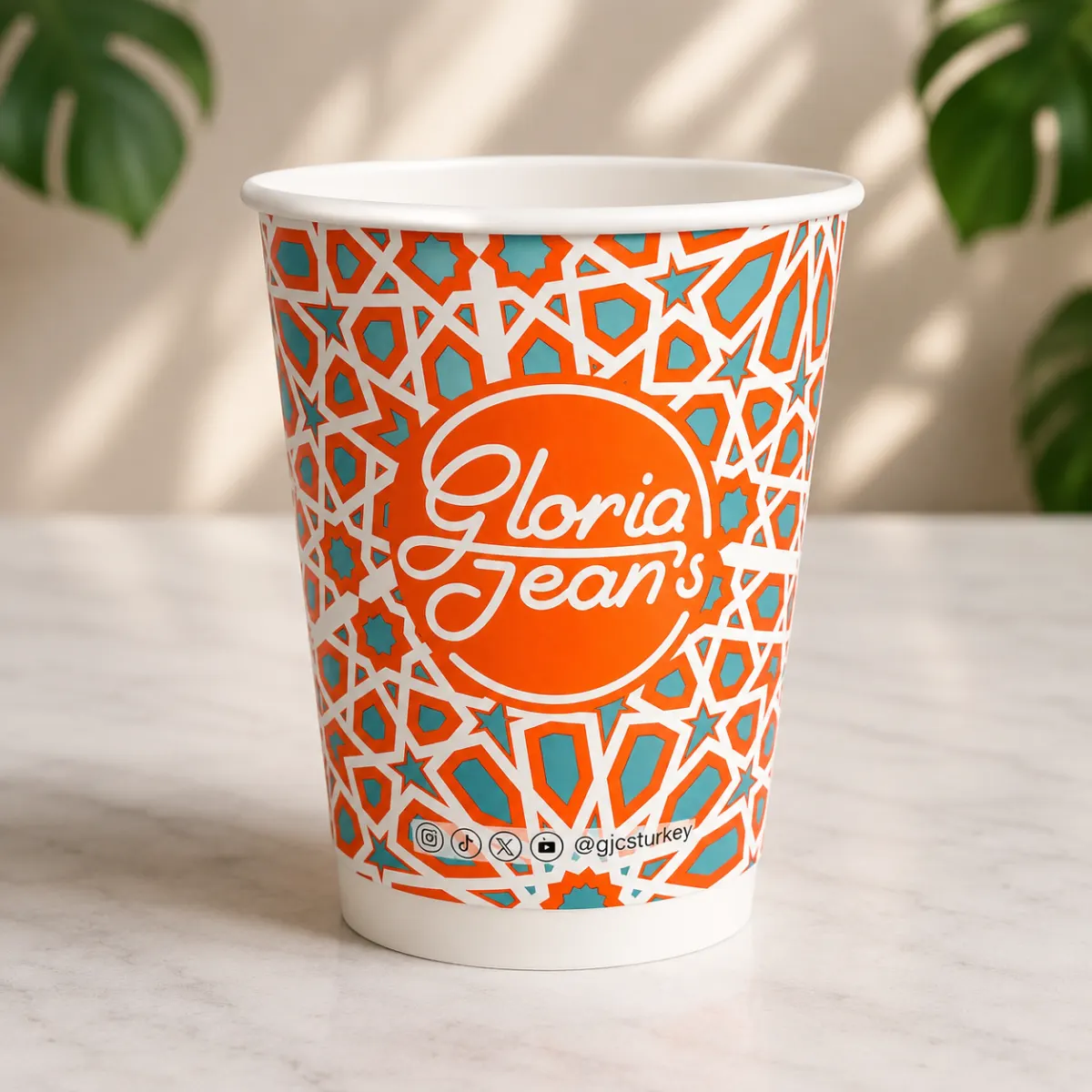
A paper cup is no longer just a beverage container — it's the most visible advertising space where your brand meets your customer every day. The right print makes your brand memorable; the wrong print means wasted money and time. In this guide, we'll walk you through everything you need to know when ordering custom printed paper cups from Turkey — from printing techniques to MOQ, from file preparation to color management, from Arabic printing to common mistakes — step by step.
This is not an advertisement — it's a practical guide. At the end, if you find that Dam Cups Group suits you, there's a link. If not, you've learned how to work wisely with another supplier.
🖨️ 1. Printing Techniques: Flexo or Offset?
Paper cup factories in Turkey use two main printing techniques. Which one you choose depends on your needs and budget:
| Criterion | Flexo Printing | Offset Printing |
|---|---|---|
| Quality | Good (2–6 colors) | Excellent (photo quality) |
| Color count | Limited (usually 4) | Wide (6+ colors) |
| MOQ | Low (1,000+) | High (10,000+) |
| Unit cost | Low | High |
| Setup cost | Low (plate) | High (plate + calibration) |
| Best for | Simple logo, large volume | Photos, detail, premium brand |
| Lead time | 10–15 days | 15–25 days |
When Flexo?
- Simple logo or 2–3 color design
- Large volume (10,000+ units)
- Cost priority
- Fast delivery
When Offset?
- Photo-quality image (coffee, landscape, product)
- Premium brand positioning
- Multi-color, detailed design
- MOQ 10,000+
Tip: Start with flexo on your first order. As your brand grows, move to offset. This optimizes cost.
📐 2. File Preparation: How to Prepare a Print-Ready File
Wrong file = bad print. Here are the file standards you must send to your supplier:
File Format
- AI (Adobe Illustrator): Most preferred
- PDF (vector): Alternative
- EPS: Old but acceptable
- ❌ JPG / PNG / Word / PowerPoint: Not accepted (resolution and vector issues)
Color Mode
- CMYK: Correct mode for print
- ❌ RGB: For screens, colors shift in print
- ❌ Pantone: Spot color — some factories support it, but usually extra cost
Resolution
- Vector graphics: No resolution issue
- Bitmap images: At least 300 DPI
- ❌ 72 DPI (web image): Blurry in print
Bleed
- 2–3 mm bleed: Margin from edges
- Safe zone: Keep logo at least 3 mm from the edge
- Why? Small shifts can happen during cutting
Fonts
- Convert fonts to outline: Otherwise the supplier may not have the font
- Or send the fonts: With licenses
Layers
- Separate layers: Each color in a separate layer
- White ink: Separate layer for transparent backgrounds
Tip: Before sending the file, request a soft proof from the supplier. This is your last check before printing.
🎨 3. Color Management: Why Colors Differ
The color you see on screen isn't always the same in print. Reasons:
- RGB vs CMYK: Screen is RGB, print is CMYK. Some colors (bright orange, neon green) don't reproduce exactly in CMYK
- Paper color: White paper vs cream paper gives different results
- Ink: Different ink brands give different tones
- Machine calibration: Each machine has different calibration
Tips for Color Accuracy
- Use Pantone: If you have a critical corporate color, specify a Pantone code (may be extra cost)
- Request a digital proof: To see colors before printing
- Request a physical sample: Always on the first order
- Choose simple colors: Avoid very bright or neon colors
🔤 4. Arabic Printing: What to Watch For
If you sell in the Middle East or North Africa, Arabic printing is critical. But not every Turkish factory is skilled at it.
Arabic Printing Checklist
- ✅ Font: Use an Arabic-supporting font (Arial, Traditional Arabic, Cairo, Tajawal)
- ✅ Direction: Correct right-to-left (RTL) orientation
- ✅ Ligature: Arabic letters must connect
- ✅ Diacritics: Add diacritics if needed
- ✅ Test: Ask an Arabic speaker to verify before printing
- ✅ Sample: On the first order, request an Arabic-printed sample
Common Arabic Printing Mistakes
- ❌ Letters disconnected (no ligature)
- ❌ Wrong direction (left-to-right)
- ❌ Font not supported (boxes)
- ❌ Diacritics in wrong place
- ❌ Words cut off
Tip: Ask your supplier: "Do you have Arabic printing experience?" Request references. On the first order, request an Arabic-text sample.
📦 5. MOQ and Printing
MOQ for printed cups is higher than for unprinted cups — because plate preparation and machine setup are required.
| Printing Type | Typical MOQ | Plate Cost |
|---|---|---|
| Unprinted | 1,000+ | None |
| Single-color flexo | 5,000+ | Low |
| 2–4 color flexo | 10,000+ | Medium |
| Offset | 20,000+ | High |
| Spot color (Pantone) | 10,000+ | Medium-High |
Tip: To lower MOQ, negotiate with the supplier. Sometimes they accept 3,000 instead of 5,000 (with extra fees).
⚠️ 6. Common Printing Mistakes (And How to Avoid Them)
- Sending the wrong file format. Send AI/PDF (vector) instead of JPG/PNG.
- Using RGB color mode. Convert to CMYK.
- Low resolution. Bitmap images must be 300 DPI.
- Forgetting bleed. Add 2–3 mm.
- Not converting fonts to outline. Fonts may disappear.
- Not requesting a digital proof. Last check before print.
- Not requesting a physical sample. Always on the first order.
- Not testing Arabic printing. Ask an Arabic speaker to verify.
- Wrong color expectation. Screen ≠ print.
- Not checking MOQ. Small order = higher unit cost.
💡 7. Printing Design Tips
- Keep it simple: Few colors, strong logo, memorable.
- Big logo: The cup is a small area — the logo must be clear.
- Add contact info: Website, phone, QR code.
- Social media: Instagram, WhatsApp icons.
- QR code: Directs to menu, campaign, or social media.
- Cup bottom: Sometimes the bottom can also be printed.
- Sleeve: Printing on the sleeve instead of the cup — cheaper.
❓ 8. Frequently Asked Questions
How many colors can I print?
Flexo: usually up to 4 colors. Offset: 6+ colors. Pantone spot color is possible but at extra cost.
How much more expensive are printed cups?
Single color: 15–30% more. Multi-color: 30–50%. Offset: 50–100%.
What is the MOQ?
Single-color flexo: 5,000+. Multi-color: 10,000+. Offset: 20,000+. Unprinted: 1,000+.
Can I print in Arabic?
Yes, but make sure the supplier has Arabic printing experience. Request an Arabic sample on the first order.
How should I send my file?
AI or vector PDF. CMYK mode, 300 DPI, 2–3 mm bleed, fonts outlined.
How long does printing take?
Flexo: 10–15 days. Offset: 15–25 days. (Production + print setup)
Can I get a sample?
Yes, always request a physical sample on the first order. A digital proof isn't enough.
🚀 9. Summary: Printed Cup Order Checklist
- ☐ Choose the printing technique: Flexo (economical) or offset (premium)
- ☐ Prepare the file: AI/PDF, CMYK, 300 DPI, bleed, outlined fonts
- ☐ Check colors: Do you need Pantone?
- ☐ Arabic printing: If needed, test it
- ☐ Clarify MOQ: 5,000 / 10,000 / 20,000
- ☐ Request a digital proof: Last check before print
- ☐ Request a physical sample: Always on the first order
- ☐ Check printing mistakes: The 10 items above
- ☐ Clarify delivery time: 10–25 days
- ☐ Add print specifications to the contract: Color, dimensions, material
Paper Cups
View product details: single wall, double wall, and ripple paper cups, ready for export and wholesale.
Paper Cup Details— This guide is part of the "Importing Paper Cups from Turkey" series — a series of articles aimed at helping importers, restaurants, and distributors make better purchasing decisions.
Comments (0)
Leave a Comment
You must login to comment.
No comments yet. Be the first to comment!