
📑 Table of Contents
- 📦 Importing Pizza Boxes from Turkey: The Complete Buyer's Guide
- 🌍 1. Why Pizza Boxes Matter So Much
- Plastic Is Retreating — Paper Is Advancing
- The Result?
- 📊 2. Why Turkey? An Honest Comparison
- Why This Matters
- 🔧 3. Technical Specs You Must Know Before Ordering
- Cardboard Type (Flute)
- Printing
- Certifications
- Sizes
- 🚚 4. The Practical Side: How to Import Smartly
- Shipping — A Smart Comparison
- Essential Documents
- How to Choose the Right Supplier (Checklist)
- ⚠️ 5. Common Mistakes That Cost Importers Money
- ❓ 6. Frequently Asked Questions
- How long does shipping from Turkey take?
- Can I print Arabic on the boxes?
- What is the minimum order quantity?
- Is Turkish paper approved for food use?
- Can I get a sample before ordering?
- What's the best payment method?
- 🚀 7. Summary: How to Start
- 📩 For More Information, Contact Us: Paper Port
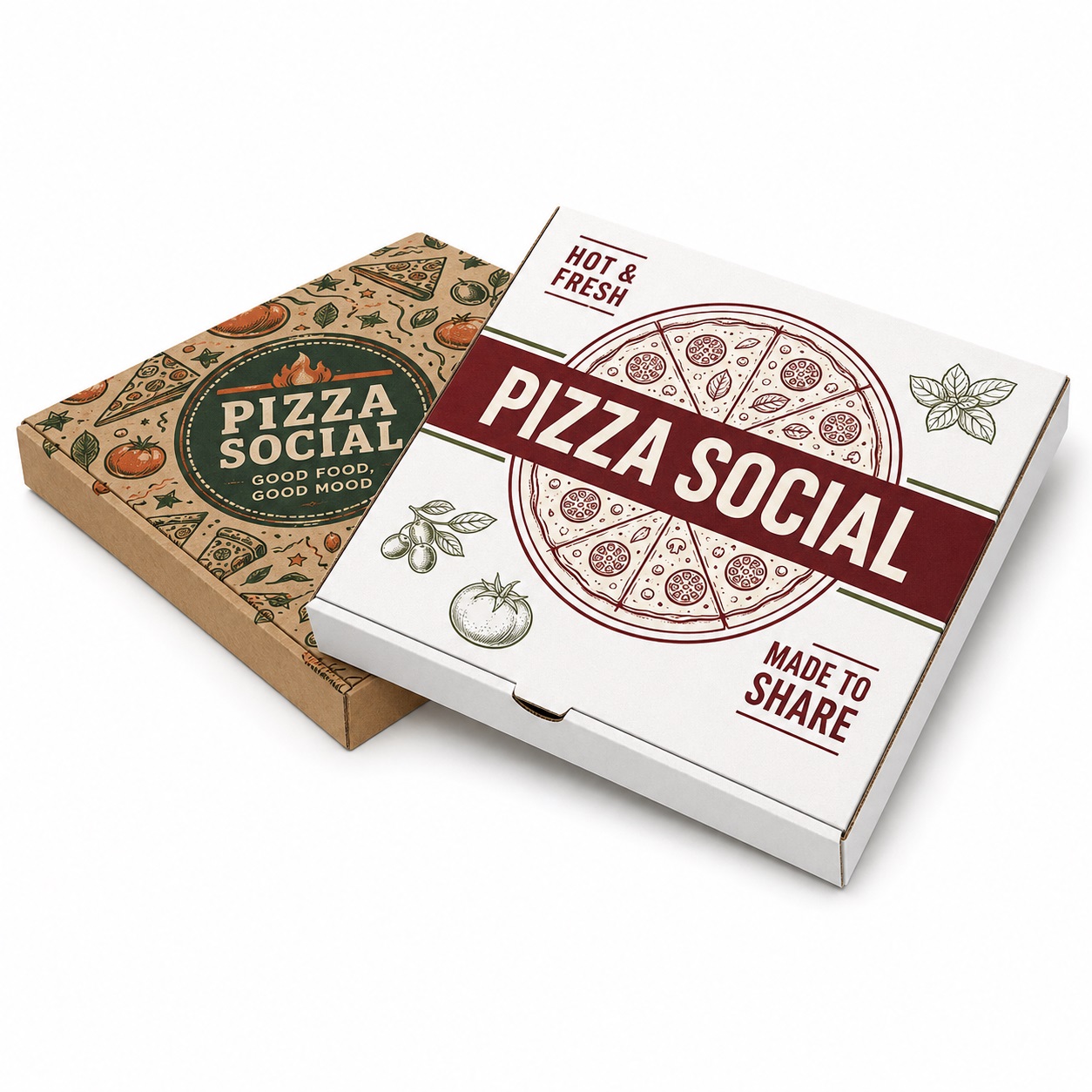
📦 Importing Pizza Boxes from Turkey: The Complete Buyer's Guide
Turkey has become one of the world's leading hubs for food packaging exports in recent years. Businesses across Europe, the Middle East, North Africa, and beyond are turning to Turkey for competitive pricing, high-quality manufacturing, and a strategic geographic location. In this guide, we'll walk you through everything you need to know about importing pizza boxes from Turkey — from choosing a supplier to customs, from quality control to shipping — step by step.
This is not an advertisement — it's a practical guide. At the end, if you find that Paper Port suits you, there's a link. If not, you've learned how to choose another supplier wisely.
🌍 1. Why Pizza Boxes Matter So Much
Pizza is one of the most consumed takeaway foods in the world, and every pizza reaches the consumer inside a box. In Europe alone, millions of boxes are used every day. In North Africa and the Middle East, with the spread of pizza restaurants and delivery chains, demand for corrugated boxes has risen noticeably over the past five years.
Plastic Is Retreating — Paper Is Advancing
In recent years, there's been a clear global shift from single-use plastic to paper alternatives. Restaurants and cafés across Europe, North Africa, and the Middle East are looking for paper alternatives for everything, including takeaway packaging. Pizza boxes were always paper — but demand rose because everything else is converting to paper, and suppliers who import paper need to expand their range.
The Result?
An importer who masters importing pizza boxes from Turkey today builds a foundation they can later expand to burger boxes, takeaway bags, coffee cups, and everything converting from plastic to paper.
📊 2. Why Turkey? An Honest Comparison
This question deserves a direct answer, not flattery. Here's the comparison as buyers actually see it:
| Criterion | Turkey | China | Europe |
|---|---|---|---|
| Shipping time | Days | Weeks | Days |
| Cost | Medium–Low | Very low | High |
| Print quality | High (flexo/offset) | Medium–High | Very high |
| Minimum order (MOQ) | Relatively flexible | High | High |
| Business communication | Easy | Medium | Easy |
| Food standards | FSC, ISO 22000 available | Variable | Strict |
| EU/Middle East market experience | High | Medium | High |
Why This Matters
Turkey isn't just a "cheap supplier." Turkey is:
- Geographically closer: to Europe, North Africa, and the Middle East than China. This means faster shipping, less capital tied up in inventory, and the ability to reorder quickly.
- Culturally and commercially closer: Communication is easier, negotiation clearer.
- Close to European quality: at 20–40% lower cost than European alternatives.
This is why Turkish packaging factories have become a primary supplier for restaurants across Europe, the Middle East, and North Africa over the past decade.
🔧 3. Technical Specs You Must Know Before Ordering
This section separates a buyer who knows what they want from one who sends "I want pizza boxes" and then gets surprised.
Cardboard Type (Flute)
Pizza boxes are typically made from corrugated cardboard. There are three main types:
| Type | Thickness | Best Use |
|---|---|---|
| E-Flute | ~1.5 mm | Premium boxes, high print quality, luxury pizza |
| B-Flute | ~3 mm | Most common pizza box — balance of strength and cost |
| C-Flute | ~4 mm | Large boxes, higher protection, heavy pizza |
Which to choose?
- Selling normal pizza for daily delivery → B-Flute is the economical, practical choice.
- Premium brand → E-Flute with high print quality.
- Large or multi-layer pizza → C-Flute or even Triplex (double-wall).
Printing
This is where Turkey's real quality shows. Turkish factories use:
- Flexo Printing: For large volumes, limited colors, lower cost.
- Offset Printing: For high quality, more colors, fine detail.
Practical tip: If you want a simple two-color logo, flexo is enough. If you want an appetizing pizza image on the box, you need offset — and that's available in Turkey at high quality.
Certifications
These aren't "luxuries." If you're importing to any market that cares about food safety, certifications protect you from legal issues:
- FSC (Forest Stewardship Council): Means paper comes from environmentally responsible sources. Increasingly required in Europe.
- ISO 22000: Means the factory follows food safety standards. Important because the box contacts food.
- BRCGS: British food packaging standard. Required in some markets.
Always ask your supplier: "Do you have FSC certification for the specific product?" — not just "Is the factory certified?"
Sizes
Standard pizza box sizes:
- 24 cm (small — personal pizza)
- 26 cm
- 30 cm
- 32 cm
- 34 cm (large — family pizza)
- Rectangular boxes (for Roman pizza or slices)
Tip: Always request a physical sample before ordering. Sizes vary from supplier to supplier, and what looks like "30 cm" on paper may differ in reality.
🚚 4. The Practical Side: How to Import Smartly
Shipping — A Smart Comparison
Instead of getting into specific numbers for each country, here's the logic:
- Turkey to Europe: Road freight (trucks) — faster and cheaper than sea freight from China.
- Turkey to North Africa and the Middle East: Short sea freight — days, not weeks.
- Turkey to the farthest point in the Arab world: Even the farthest distance remains shorter than a journey from China.
Golden rule: Every day you save in shipping is capital not tied up in inventory.
Essential Documents
Instead of detailing every country's laws, here are the documents almost every importer requests:
- Commercial Invoice
- Certificate of Origin
- Bill of Lading
- Packing List
- FSC certificate if available
Tip: To avoid customs delays, make sure your supplier sends documents correctly before shipping.
How to Choose the Right Supplier (Checklist)
- Request a physical sample (Golden Sample), not a photo. The sample tells you about real quality, cardboard thickness, print quality, and smell (yes, paper smell matters if it contacts food).
- Verify food safety certification for the specific product. Don't accept "the factory is certified" — ask for the product's own certificate.
- Ask about MOQ (Minimum Order Quantity). Turkish factories differ: some accept 1,000 units, others 10,000. Be clear about your needs.
- Ask about production lead time. Usually 15–30 days depending on quantity and printing.
- Ask about shipping time. Turkey to Europe: days. To North Africa: days. To the farthest point: still shorter than China.
- Request previous client references. A good supplier doesn't hide their clients.
- Verify Arabic printing capability. If you're importing to an Arab market, you need clear Arabic printing. Not every Turkish factory is skilled at this.
⚠️ 5. Common Mistakes That Cost Importers Money
- Ordering from a supplier not specialized in food packaging. Regular paper isn't necessarily food-safe. You need certification.
- Ignoring shipping costs when comparing. The "cheapest" price can become the most expensive after shipping.
- Not requesting a sample before ordering. 90% of problems appear in the sample, but people ignore them.
- Relying only on product photos. Photos beautify. Samples don't lie.
- Not verifying certifications. If your supplier lacks FSC or ISO 22000, you may face problems with your clients.
- Importing large quantities before testing the market. Start small, test, then expand.
❓ 6. Frequently Asked Questions
How long does shipping from Turkey take?
Depends on the destination, but the rule is: Turkey is closer than China to Europe, North Africa, and the Middle East. Road freight to Europe takes days; sea freight to North Africa and the Middle East takes a few days.
Can I print Arabic on the boxes?
Yes, but make sure the factory has experience with Arabic printing. Request a text sample before ordering.
What is the minimum order quantity?
It varies. Some factories accept 1,000 units, others 5,000 or 10,000. Ask clearly.
Is Turkish paper approved for food use?
Yes, if the factory holds ISO 22000 and FSC. Request certificates in writing.
Can I get a sample before ordering?
Yes, most serious factories provide samples. You may only pay shipping cost.
What's the best payment method?
Bank transfer (T/T) is most common. Some factories accept LC (Letter of Credit) for large orders.
🚀 7. Summary: How to Start
- Define your need: Type, size, quantity, printing.
- Find 3–5 suppliers in Turkey. Request samples.
- Compare: Quality, price, MOQ, shipping time, certifications.
- Test one sample before a large order.
- Start with a small quantity, then expand after success.
- Work with a customs broker in your country to ease procedures.
📩 For More Information, Contact Us: Paper Port
If you're looking for a trusted Turkish supplier for pizza boxes — or any other paper food packaging products — you can start here:
The Paper Port team is ready to answer your questions, send samples, and prepare a custom quote within a short time.
— This guide is part of the "Importing Paper Food Packaging from Turkey" series — a series of articles aimed at helping importers, restaurants, and distributors make better purchasing decisions.
Comments (0)
Leave a Comment
You must login to comment.
No comments yet. Be the first to comment!