
📑 Table of Contents
- ☕ Single Wall Paper Cups: A Comprehensive Buyer's Guide
- 🥤 1. What Is a Single Wall Paper Cup?
- Key Characteristics
- Where Is It Used?
- 📏 2. Single Wall Cup Sizes (2.5 oz – 22 oz)
- Which Size to Choose?
- ⚖️ 3. Single Wall vs Double Wall: Which Suits You?
- When Single Wall?
- When Double Wall?
- 🔧 4. Technical Specs: What to Look For When Choosing?
- Grammage
- Inner Coating
- Printing
- Certifications
- 💰 5. Single Wall Cup Prices (2026)
- Factors Affecting Price
- ⚠️ 6. Common Mistakes When Buying Single Wall Cups
- ❓ 7. Frequently Asked Questions
- Is a single wall cup suitable for hot drinks?
- Which grammage should I choose?
- PE or PLA?
- How many sizes should I stock?
- What is the MOQ?
- Can I get a sample?
- How long does delivery take?
- 🚀 8. Summary: Single Wall Cup Selection Checklist
- Paper Cups
☕ Single Wall Paper Cups: A Comprehensive Buyer's Guide
The single wall paper cup is the most widely used paper cup type in the world. You find it in cafés, restaurants, hotels, and offices everywhere. But "single wall" doesn't mean "all single wall cups are the same." Differences in grammage, size, printing, and certification create significant quality gaps between two cups that look identical. In this guide, we'll walk you through everything you need to know about single wall paper cups — what they are, available sizes, where they're used, how they differ from double wall, how to choose, prices, and common mistakes — step by step.
This is not an advertisement — it's a practical guide. At the end, if you find that Dam Cups Group suits you, there's a link. If not, you've learned how to buy wisely from another supplier.
🥤 1. What Is a Single Wall Paper Cup?
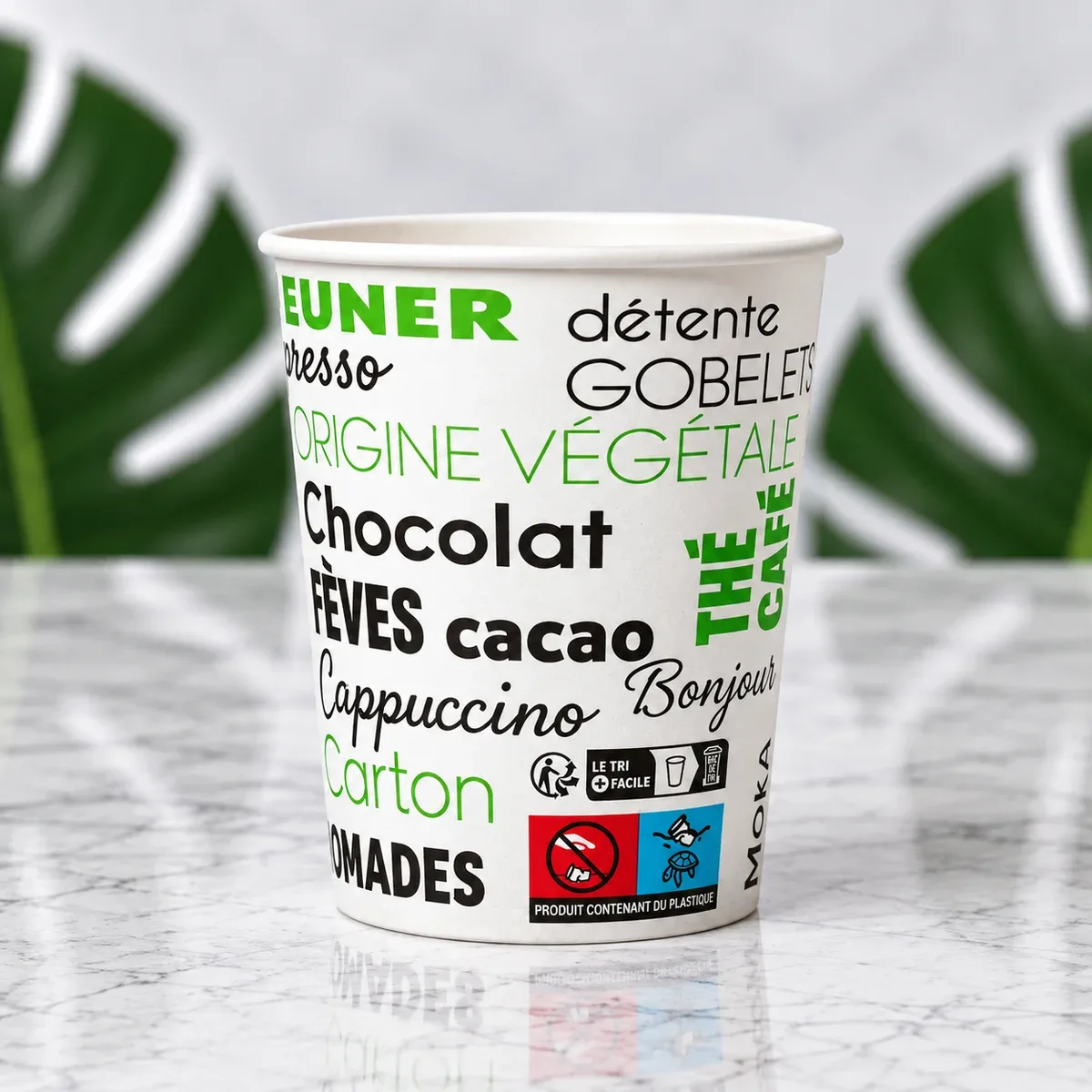
A single wall paper cup is a beverage container made from a single layer of paper. The inner surface is usually coated with polyethylene (PE) or PLA — this prevents liquid from seeping into the paper. The outer surface may be unprinted or printed.
Key Characteristics
| Characteristic | Details |
|---|---|
| Structure | Single paper layer + inner coating (PE/PLA) |
| Grammage | 170–280 gsm (common: 210–240 gsm) |
| Sizes | 2.5 oz – 22 oz |
| Usage | Hot and cold beverages |
| Thermal insulation | Low (very hot drinks may need a sleeve) |
| Cost | Economical |
| Printing | Flexo (up to 4 colors) or offset |
Where Is It Used?
- Cafés: Espresso, americano, latte, tea
- Restaurants: Cold drinks, water, soda
- Hotels: Room service, breakfast, meetings
- Offices: Water dispenser, coffee machine
- Events: Fairs, concerts, weddings
- Fast food: Soda, milkshake, smoothie
📏 2. Single Wall Cup Sizes (2.5 oz – 22 oz)
Single wall cups are produced from small espresso to large beverages. Here are the common sizes:
| Size | Volume (cc) | Top Diameter (mm) | Height (mm) | Bottom Diameter (mm) | Usage |
|---|---|---|---|---|---|
| 2.5 oz | 75 | 50 | 45 | 35 | Espresso, tasting |
| 4 oz | 100 | 62 | 61 | 45 | Espresso, small tea |
| 5 oz | 148 | 70 | 70 | 46 | Turkish coffee, tea |
| 6 oz | 180 | 70 | 80 | 49 | Tea, filter coffee |
| 7 oz | 180 | 70 | 80 | 49 | Tea, coffee |
| 8 oz | 240 | 80 | 90 | 56 | Standard coffee |
| 12 oz | 350 | 90 | 112 | 60 | Medium coffee, cold drink |
| 16 oz | 470 | 90 | 135 | 60 | Large coffee, soda |
| 22 oz | 650 | 90 | 168 | 61 | Extra-large beverage |
Which Size to Choose?
- Espresso / Turkish coffee: 2.5–4 oz
- Tea: 5–7 oz
- Filter coffee / Americano: 8–12 oz
- Latte / Cappuccino: 12–16 oz
- Cold drink / Soda: 12–22 oz
Tip: The same café needs different sizes for different drinks. Usually 3–4 sizes are enough.
⚖️ 3. Single Wall vs Double Wall: Which Suits You?
The most common question: "Single or double?" Here's the comparison:
| Criterion | Single Wall | Double Wall |
|---|---|---|
| Structure | 1 paper layer | 2 paper layers |
| Thermal insulation | Low (sleeve may be needed) | High (no sleeve needed) |
| Cost | Economical | 30–50% more expensive |
| Grammage | 170–280 gsm | 2×170–280 gsm |
| Premium look | Standard | More elegant |
| Hot drinks | Suitable with sleeve | Suitable without sleeve |
| Cold drinks | Suitable | Unnecessary (higher cost) |
| Best for | Café, restaurant, office | Premium café, hotel |
When Single Wall?
- Cold-drink-heavy menu
- Cost priority
- If you're open to using sleeves
- Short-term consumption (event, fair)
When Double Wall?
- Hot-drink-heavy menu
- If you don't want to use sleeves
- Premium brand positioning
- Customer experience priority
Recommendation: Most businesses find single wall + sleeve the most economical solution. Premium brands prefer double wall.
🔧 4. Technical Specs: What to Look For When Choosing?
Grammage
- 170–190 gsm: Economical, short-term use
- 210–240 gsm: Standard, daily use (most common)
- 250–280 gsm: Premium, long-term use
- 300+ gsm: Very durable, special use
Inner Coating
- PE (Polyethylene): Most common, waterproof, economical
- PLA (Polylactic Acid): Biodegradable, eco-friendly, more expensive
- Water-based coating: Recyclable, new technology
Printing
- Unprinted: Most economical, unbranded use
- Flexo: 2–4 colors, large volume
- Offset: 6+ colors, high quality
Certifications
- FSC: Sustainable paper
- ISO 22000: Food safety
- HACCP: Food safety control points
- FDA / LFGB: Food contact compliance
💰 5. Single Wall Cup Prices (2026)
The prices below are estimates and vary with market conditions. Always request a current quote for exact pricing.
| Size | Unprinted (1,000 units) | Single Color (1,000 units) | Multi-Color (10,000 units) |
|---|---|---|---|
| 4 oz | $15 – $25 | $20 – $35 | $18 – $30 |
| 7 oz | $18 – $28 | $25 – $38 | $20 – $33 |
| 8 oz | $20 – $35 | $30 – $45 | $25 – $40 |
| 12 oz | $25 – $40 | $35 – $50 | $30 – $45 |
| 16 oz | $30 – $50 | $40 – $65 | $35 – $55 |
| 22 oz | $35 – $55 | $50 – $75 | $40 – $65 |
Note: Prices are FOB Turkey. Shipping, customs, and insurance are excluded.
Factors Affecting Price
- Grammage: Higher grammage = higher price
- Size: Larger size = higher price
- Printing: More colors = higher price
- Quantity: Larger quantity = lower unit price
- Coating: PLA is more expensive than PE
- Certification: Certified product is slightly more expensive
⚠️ 6. Common Mistakes When Buying Single Wall Cups
- Looking only at price. A cheap cup may mean lower grammage or lower quality.
- Not checking grammage. Big difference between 170 and 240 gsm.
- Choosing the wrong size. An 8 oz cup doesn't fit a 12 oz drink.
- Not accounting for sleeves. For hot drinks, sleeve cost is added.
- Not asking about coating. PE or PLA? Eco-friendly?
- Not asking about certificates. If there's no FSC or ISO 22000, customs problems.
- Not requesting a sample. The sample confirms quality.
- Not checking MOQ. Small order = higher unit price.
- Not asking about lead time. 15–30 days is normal.
- Not asking about packaging. Carton, pallet, container — affects shipping cost.
❓ 7. Frequently Asked Questions
Is a single wall cup suitable for hot drinks?
Yes, but for very hot drinks, using a sleeve is recommended. Otherwise the cup becomes hot and bothers the customer.
Which grammage should I choose?
For daily use, 210–240 gsm is ideal. For premium brands, 250–280 gsm. For economical solutions, 170–190 gsm.
PE or PLA?
PE is economical and common. PLA is biodegradable and eco-friendly but more expensive. Markets with high environmental awareness prefer PLA.
How many sizes should I stock?
Usually 3–4 sizes are enough: 4 oz (espresso), 8 oz (coffee), 12 oz (medium), 16 oz (large).
What is the MOQ?
Unprinted: 1,000+. Single color: 5,000+. Multi-color: 10,000+. Offset: 20,000+.
Can I get a sample?
Yes, always request a physical sample on the first order. A digital proof isn't enough.
How long does delivery take?
Production: 15–30 days. Shipping: 3–30 days depending on destination.
🚀 8. Summary: Single Wall Cup Selection Checklist
- ☐ Define the need: Hot or cold? Which drinks?
- ☐ Choose sizes: 4, 8, 12, 16 oz — how many?
- ☐ Determine grammage: Between 170–280 gsm
- ☐ Choose coating: PE (economical) or PLA (eco-friendly)
- ☐ Plan printing: Unprinted, single color, multi-color
- ☐ Request certificates: FSC, ISO 22000, HACCP
- ☐ Need sleeves? Consider for hot drinks
- ☐ Request quotes: From 3–5 suppliers
- ☐ Request a sample: Always on the first order
- ☐ Clarify MOQ and lead time
- ☐ Sign the contract: Specification, Incoterms, penalty clauses
- ☐ Check packaging: Carton, pallet, container
Paper Cups
View product details: single wall, double wall, and ripple paper cups, ready for export and wholesale.
Paper Cup Details— This guide is part of the "Importing Paper Cups from Turkey" series — a series of articles aimed at helping importers, restaurants, and distributors make better purchasing decisions.
Comments (0)
Leave a Comment
You must login to comment.
No comments yet. Be the first to comment!